

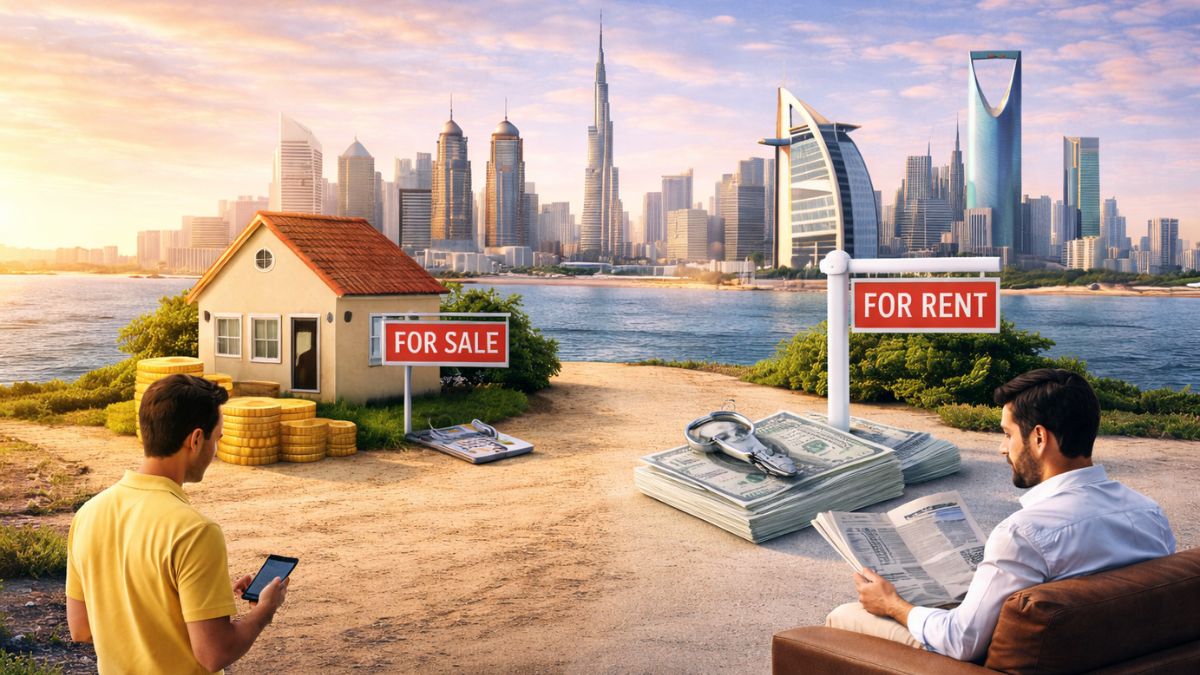

If you’re living in Dubai or planning to move here, you’ve probably asked yourself this at least once: buying vs renting in Dubai, which makes more financial sense? With rising Dubai rental prices, strong momentum in the Dubai real estate market, and increasing interest in buying property in Dubai, the decision today requires more strategy than ever.
Dubai is not just another property market. It’s a global investment hub fueled by expat demand, foreign capital, and government-backed infrastructure growth. Whether you’re an expat professional, entrepreneur, or investor, your decision between renting and buying affects your long-term wealth, flexibility, and lifestyle.
Buying property in Dubai is typically better for long-term residents (5+ years) who can afford the upfront costs and want to build equity. Renting is ideal for short-term expats seeking flexibility and lower initial commitment. The right option depends on your stay duration, financial strength, and investment goals.
Now let’s break it down in detail.

Overview of the Dubai Real Estate Market
Understanding the Dubai real estate market is essential before choosing between ownership and renting.
Dubai Housing Market Growth and Stability
Over the past three years, the Dubai housing market has shown impressive resilience. After global economic slowdowns, Dubai rebounded strongly, driven by:
- Population growth
- Foreign direct investment
- Golden Visa reforms
- High-net-worth migration
- Strong tourism recovery
According to Dubai Land Department data, total real estate transactions crossed record levels in 2023 and 2024, with residential sales exceeding AED 400 billion annually.
This growth reflects strong investor confidence and sustained end-user demand.
Dubai Property Prices
Dubai property prices vary widely depending on location:
- Prime areas (Palm Jumeirah, Downtown): Significant appreciation in recent years
- Mid-market areas (JVC, Business Bay): Stable and consistent growth
- Emerging areas: Competitive pricing with higher yield potential
Dubai remains attractive globally because:
- No annual property tax
- Strong rental yields (6-8% in many areas)
- Transparent legal framework
Dubai Real Estate Trends
Current Dubai real estate trends include:
- Strong off-plan sales
- Increased villa demand
- Expanding mortgage market
- Growing institutional investment
The Dubai property market forecast suggests moderate, sustainable growth over the next 3-5 years rather than speculative spikes.
The Dubai housing market outlook remains positive, supported by economic diversification and government-backed mega projects.
Cost of Buying Property in Dubai
Let’s look at the real financial commitment required to buy property in Dubai.
Upfront Costs (Down Payment and Fees)
The cost of buying property in Dubai goes beyond the purchase price.
For expats:
- Minimum down payment in Dubai: 20% (properties under AED 5 million)
- 30% (above AED 5 million)
- Dubai Land Department (DLD) fee: 4%
- Agency commission: 2%
- Mortgage registration fee: 0.25%
- Bank processing fee: ~1%
Example:
Property price: AED 1,500,000
|
Cost Component |
Estimated Amount |
|
Down Payment (20%) |
AED 300,000 |
|
DLD Fee (4%) |
AED 60,000 |
|
Agency Fee (2%) |
AED 30,000 |
|
Bank & Misc Fees |
~AED 20,000 |
|
Total Upfront |
~AED 410,000 |
That’s a serious capital commitment.
Mortgage and Financing Options
Getting a home loan in the UAE is structured and regulated.
- Dubai mortgage rates: Typically 3.5%-5.5%
- Loan tenure: Up to 25 years
- UAE property loan eligibility: Based on income, employment stability, and debt-to-income ratio
Banks typically finance up to 80% for expats. Property financing in Dubai is competitive due to strong banking regulations.
Hidden Costs of Buying Property in Dubai
Many buyers overlook:
- Service charges (AED 10-30 per sq. ft annually)
- Maintenance and repairs
- Insurance
- Vacancy risk for investors
These hidden costs directly impact your real estate ROI in the UAE.
Dubai Rental Prices and Renting Costs
Now let’s examine the alternative.
Average Rent in Dubai by Area (2025 Estimates)
Here’s a realistic snapshot of Dubai rental prices 2025:
|
Area |
1-Bedroom Annual Rent |
|
Dubai Marina |
AED 90,000-140,000 |
|
Downtown Dubai |
AED 110,000-180,000 |
|
JVC |
AED 60,000-90,000 |
|
Business Bay |
AED 80,000-120,000 |
|
Dubai Hills |
AED 85,000-130,000 |
The average rent in Dubai for a 1-bedroom apartment ranges from AED 75,000 to AED 120,000 per year.
Long-Term Rent in Dubai
Most leases are annual contracts paid in 1-4 cheques. Renting offers:
- Lower upfront cost
- No DLD fees
- No maintenance burden
- Flexibility to relocate
However, rising Dubai rental prices can impact long-term affordability.
Best Areas to Buy Property in Dubai
If ownership is your goal, location determines profitability.
High Rental Yield Areas in Dubai
Areas offering strong rental yield in Dubai (6-8% average):
- JVC
- Business Bay
- Dubai Silicon Oasis
- International City
These areas are popular among investors seeking passive income.
Luxury Property Investment Dubai
Premium communities for appreciation:
- Palm Jumeirah
- Downtown Dubai
- Dubai Hills Estate
- Emirates Hills
Apartments for sale in Dubai range from AED 500,000 studios to multi-million dollar luxury penthouses. Villas for sale in Dubai typically start at AED 1.5 million or more.
Best Areas to Rent in Dubai
The best areas to rent in Dubai depend on lifestyle and budget:
- Young professionals: Dubai Marina, Business Bay
- Families: Arabian Ranches, Mirdif, Dubai Hills
- Budget-conscious expats: JVC, Al Nahda
Housing costs in Dubai vary dramatically by community amenities and location.
ROI Comparison: Renting vs Buying in Dubai
This is where strategy matters.
5-Year Cost Comparison Example
Assume:
Property price: AED 1,500,000
Equivalent annual rent: AED 110,000
Renting for 5 years:
110,000 × 5 = AED 550,000
Buying for 5 years:
- Mortgage payments: ~AED 500,000
- Equity built: ~AED 300,000+
- Possible property appreciation in Dubai: 5-15%
Ownership builds equity. Renting does not.
Rental Yield vs Ownership Equity
|
Factor |
Renting |
Buying |
|
Upfront Cost |
Low |
High |
|
Equity |
No |
Yes |
|
Flexibility |
High |
Low |
|
Rental Yield |
No |
6-8% |
|
Appreciation |
No |
Possible |
Is Dubai property a good investment? In strong locations, it can be one of the best investments in the UAE, especially for long-term holders.
Can Expats Buy Property in Dubai?
Yes, can expats buy property in Dubai? Absolutely.
Freehold Property in Dubai
Expats can buy in designated freehold zones such as:
- Dubai Marina
- Downtown
- Palm Jumeirah
- JVC
Property Ownership Rules in the UAE
Buying property in Dubai for expats provides:
- Full ownership rights
- Ability to lease or resell
- Eligibility for residency visas (subject to value thresholds)
Dubai’s regulatory framework is transparent and investor-friendly.
Ready Property vs Off-Plan Property in Dubai
Off-Plan Property Dubai
Pros:
- Lower entry price
- Developer payment plans
- Strong appreciation potential
Cons:
- Delivery delays
- Market fluctuation risk
Ready Property vs Off-Plan Dubai
Ready properties offer:
- Immediate occupancy
- Immediate rental income
- Lower uncertainty
Choice depends on your risk appetite and liquidity.
Pros and Cons of Buying Property in Dubai
Pros
- Equity growth
- Residency benefits
- Rental income potential
- No annual property tax
Cons
- High upfront capital
- Market volatility
- Maintenance costs
Advantages of Renting in Dubai
- Flexibility
- Lower financial commitment
- No ownership risk
Is It Cheaper to Rent or Buy in Dubai?
So, is it cheaper to rent or buy in Dubai?
Short-term (under 3 years): Renting usually wins.
Long-term (5+ years): Buying often builds wealth.
Monthly Cost of Owning a Home in Dubai
Example breakdown:
- Mortgage: AED 9,000
- Service charges: AED 1,200
- Total monthly ownership cost: ~AED 10,200
Comparable rent: AED 9,000-11,000
The gap is often smaller than people assume.
Which Option Is Better for You?
Long-Term Residents
Buying may be smarter financially.
Short-Term Expats
Renting provides mobility and lower risk.
Investors
Buying offers passive income and a strong ROI on property in Dubai.
Families
Buying provides stability and personalisation.
The answer to whether to buy or rent in Dubai ultimately depends on your goals, income stability, and risk tolerance.
Future Outlook of the Dubai Property Market
The Dubai property market forecast suggests:
- Continued moderate appreciation
- Strong expat-driven demand
- Stable rental yields
- Growth in family communities
Dubai real estate trends indicate long-term sustainability rather than speculative bubbles.
The Dubai housing market outlook remains positive but location-specific. Prime areas may continue appreciating faster than oversupplied zones.
Frequently Asked Questions
Is it better to rent or buy in Dubai?
It depends on your stay duration and financial goals.
What is the average rent in Dubai?
AED 75,000-120,000 annually for a 1-bedroom apartment.
Can expats buy freehold property in Dubai?
Yes, in designated freehold zones.
What is the minimum down payment in Dubai?
Typically, 20% for properties under AED 5 million.
Is Dubai property a good investment?
Yes, especially in high-rental-yield areas and prime communities.
What are the hidden costs of buying property in Dubai?
DLD fees (4%), agent commission (2%), service charges, maintenance, and insurance.
Final Verdict
There’s no universal answer to the question of whether to buy or rent in Dubai. Renting offers flexibility and a lower upfront cost, and buying offers long-term wealth creation and equity growth.
The smartest decision? Align your housing choice with your financial plan, career timeline, and investment strategy.
In Dubai’s dynamic real estate market, informed decisions build long-term success.

Priya Mehta curates premium lifestyle and cultural content that reflects the Gulf’s dynamic and luxurious way of life. From high-end travel experiences to cultural events and luxury brands, her work captures the essence of modern living in the region. She combines storytelling with trend analysis to offer readers a refined and engaging perspective.