
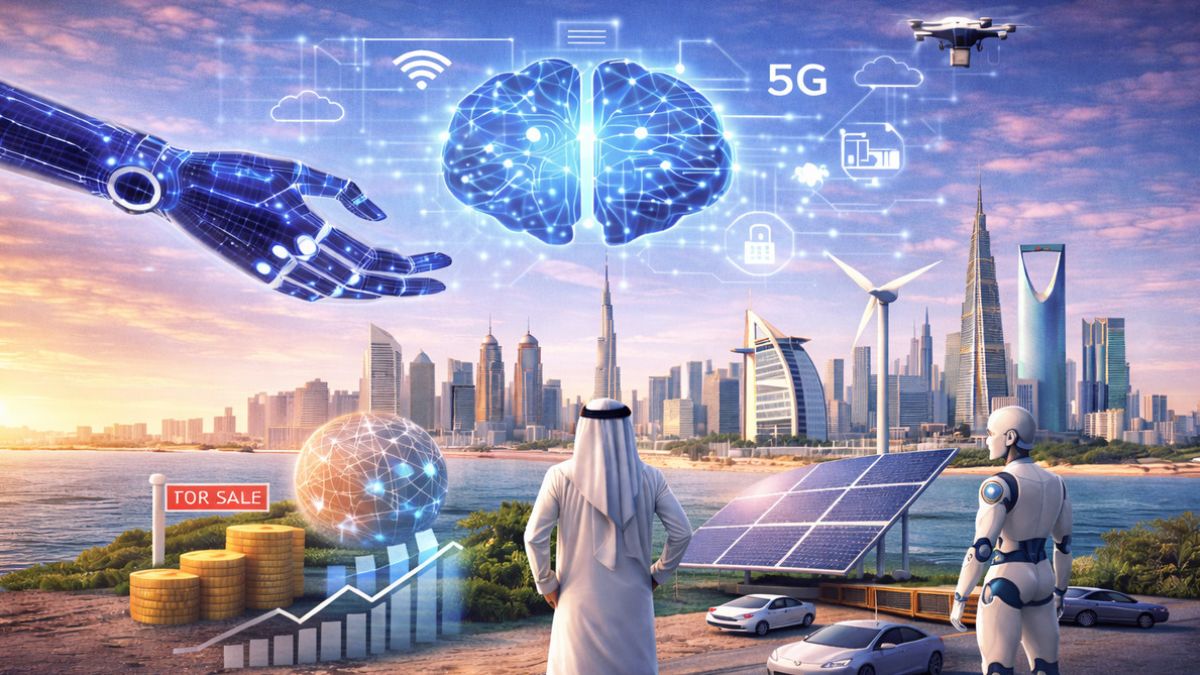

Artificial intelligence is no longer a futuristic buzzword in the region. AI in Gulf countries is actively reshaping economies, governments, and daily life. From autonomous transport in Dubai to massive digital transformation programs under AI in Saudi Arabia, the Middle East is rapidly positioning itself as a global AI powerhouse.
National strategies, billion-dollar investments, and a clear focus on future technology in Middle East economies drive the growth of artificial intelligence in the UAE and across the GCC. Governments are not just experimenting with AI; they are embedding it into infrastructure, healthcare, finance, and urban planning.
According to PwC, AI could contribute up to $320 billion to the Middle East economy by 2030, with the UAE and Saudi Arabia expected to see the highest gains. The UAE appointed the world’s first Minister of AI in 2017, while Saudi Arabia’s Vision 2030 places AI at the centre of digital transformation.
So what does this really mean for businesses, workers, and investors? Let’s break it down.
More Read

The Rise of AI in the Gulf Region
The rapid expansion of AI in Gulf economies is not accidental. It is strategic.
Over the past decade, governments across the GCC have recognised that oil revenues alone cannot sustain long-term growth. As a result, AI development in GCC countries has become a national priority.
AI Adoption in the UAE
The UAE launched its National Artificial Intelligence Strategy 2031 with a bold goal: to make the country a global leader in AI. Today, AI adoption in the UAE spans:
- Government services
- Healthcare diagnostics
- Financial services automation
- Smart mobility systems
- Security and surveillance
Dubai alone has more than 1,000 AI-related companies operating across fintech, robotics, and enterprise solutions.
AI Industry in Dubai
The AI industry in Dubai is supported by innovation hubs such as Dubai Internet City, DIFC Innovation Hub, and Area 2071. These ecosystems attract startups, multinational tech firms, and venture capital investors.
Artificial Intelligence Growth in GCC
Across the region, artificial intelligence growth in GCC is fueled by:
- Sovereign wealth fund investments
- Public-private partnerships
- Smart city development projects
- Expanding digital infrastructure
Saudi Arabia’s Public Investment Fund (PIF) has invested heavily in AI research, robotics, and advanced computing.
The momentum is clear: AI is no longer optional, it’s foundational.
Government AI Initiatives in the UAE and Saudi Arabia
Government policy plays a central role in shaping the future of AI in Gulf economies.
UAE AI Strategy and Innovation Hubs
The UAE National AI Strategy focuses on sectors such as:
- Education
- Energy
- Transportation
- Space exploration
The country established the Mohamed bin Zayed University of Artificial Intelligence (MBZUAI), one of the world’s first graduate-level AI universities. This strengthens research capacity and talent development.
Government AI initiatives in the UAE include automating public services and using AI-powered predictive analytics to improve efficiency.
Saudi Arabia’s AI and Digital Transformation Push
Under Saudi Vision 2030, AI projects aim to make the Kingdom a global leader in AI by 2030. The Saudi Data & AI Authority (SDAIA) oversees national AI programs.
Saudi Arabia has committed billions to AI infrastructure and cloud computing partnerships with global tech firms.
AI Research Centres in the Middle East
Research institutions across the UAE, Saudi Arabia, and Qatar are building AI labs focused on robotics, computer vision, and data science. These centres are strengthening the region’s credibility in global AI development.
Smart Cities in the UAE and Saudi Arabia
One of the most visible examples of AI-driven smart city transformation in the Middle East is urban planning.
How AI Powers Dubai Smart City
The Dubai smart city initiative integrates AI into:
- Traffic optimization systems
- Smart parking
- Energy grid management
- Facial recognition security
AI algorithms analyse real-time data to reduce congestion and improve public safety.
NEOM and AI-Driven Urban Planning
The flagship smart city projects in Saudi Arabia include NEOM, a $500 billion futuristic city powered by NEOM smart city technology.
NEOM aims to use AI for:
- Autonomous transport
- Predictive infrastructure maintenance
- Smart energy grids
- Data-driven governance
These future smart cities in GCC represent a shift toward fully integrated digital ecosystems.
Benefits of AI in Smart Cities
AI-driven cities improve:
- Energy efficiency
- Environmental sustainability
- Urban mobility
- Public safety
Smart cities in the UAE are already reducing energy waste through predictive analytics.
AI Jobs in Dubai and the GCC
With expansion comes opportunity. Demand for AI jobs in Dubai and across the region is surging.
Most In-Demand AI Roles
- Data Scientists
- Machine Learning Engineers
- AI Product Managers
- Robotics Engineers
- AI Ethics Specialists
Artificial intelligence jobs in Saudi Arabia are also growing, especially in large-scale infrastructure projects.
Salary Expectations for AI Professionals
Here’s a general salary overview:
Role | Monthly Salary (AED) |
Data Scientist | 20,000-40,000 |
ML Engineer | 25,000-45,000 |
AI Consultant | 30,000-50,000 |
AI Researcher | 35,000+ |
These are among the highest-paying AI jobs in the UAE.
Skills Required for AI Careers in GCC
To compete for data science jobs in the UAE or machine learning jobs in Dubai, professionals need:
- Python & R programming
- Cloud computing (AWS, Azure)
- Deep learning frameworks
- Data engineering skills
The tech jobs market in the Middle East is highly competitive but rewarding.
Impact of AI on Jobs in the UAE and Saudi Arabia
The impact of AI on jobs in the UAE is both transformative and controversial.
Automation in Saudi Arabia
Automation in Saudi Arabia is reshaping sectors such as manufacturing and logistics. Robotics in UAE warehouses improves efficiency but reduces the need for manual roles.
Industry 4.0 in the Middle East
The region is embracing Industry 4.0 technologies:
- Robotics
- IoT
- AI-powered manufacturing
While some roles may disappear, new positions in tech, cybersecurity, and AI management are emerging.
Governments are investing in workforce reskilling to balance automation risks.
Emerging Technologies Driving the Future of the Gulf
Beyond AI, several emerging technologies in the UAE are shaping digital transformation in the GCC.
AI + Blockchain Integration
Blockchain in Gulf financial systems enhances transparency and security. AI enhances fraud detection and predictive analytics.
AI in Healthcare and Finance
AI diagnoses diseases faster, improves patient monitoring, and enhances fintech fraud detection.
Enterprise AI Solutions Middle East
Corporations are adopting AI software companies in Dubai to automate operations and customer service.
Innovation in Gulf countries is becoming increasingly technology-driven.
AI Startups and Investment Opportunities
The rise of AI and tech startups in Saudi Arabia and Dubai has attracted global attention.
Venture Capital in Middle East Tech
Venture capital investment in GCC tech is growing annually. Major funding rounds target AI companies in Dubai and enterprise AI platforms.
Corporate AI Adoption
Banks, telecom firms, and logistics companies in the UAE are partnering with AI consulting firms to modernise operations.
Opportunities include:
- AI software companies in Dubai
- Robotics startups
- AI-powered SaaS platforms
For investors, the AI ecosystem presents long-term potential.
Challenges Facing AI Development in the Gulf
Despite rapid growth, challenges remain.
Artificial Intelligence in the UAE: Challenges
- Data privacy concerns
- Talent shortages
- AI regulation in GCC
AI Future in Saudi Arabia
Sustaining growth requires:
- Stronger research ecosystems
- Skilled workforce development
- International collaboration
Balanced governance is critical to maintain trust.
The Future of AI in the Gulf Economy
So, how is AI transforming the Gulf economy long term?
Projections suggest:
- AI could add over 12% to the UAE’s GDP by 2030
- Saudi Arabia aims to be among the top AI-driven economies globally
Artificial intelligence growth in GCC will impact:
- Healthcare
- Energy
- Transportation
- Education
Over the next 5-10 years, AI integration will likely become standard across industries.
The AI future in Saudi Arabia and the UAE appears both ambitious and structured.
Final Thoughts
AI in Gulf economies is not hype; it is a structured transformation backed by policy, funding, and long-term vision. From smart cities in the UAE to AI-driven megaprojects in Saudi Arabia, the region is positioning itself as a global leader in future technology in Middle East markets.
For professionals, investors, and businesses, the message is clear: the AI revolution in the Gulf has already begun.
The only question is, are you ready to be part of it?

Sofia Rahman is a forward-thinking technology journalist specializing in artificial intelligence, fintech, and digital transformation across the Middle East. With a strong background in startup ecosystems, she has covered major innovation hubs in Dubai, Riyadh, and Doha. Her writing bridges the gap between complex technologies and real-world business applications, making her a trusted voice in the region’s tech scene.