

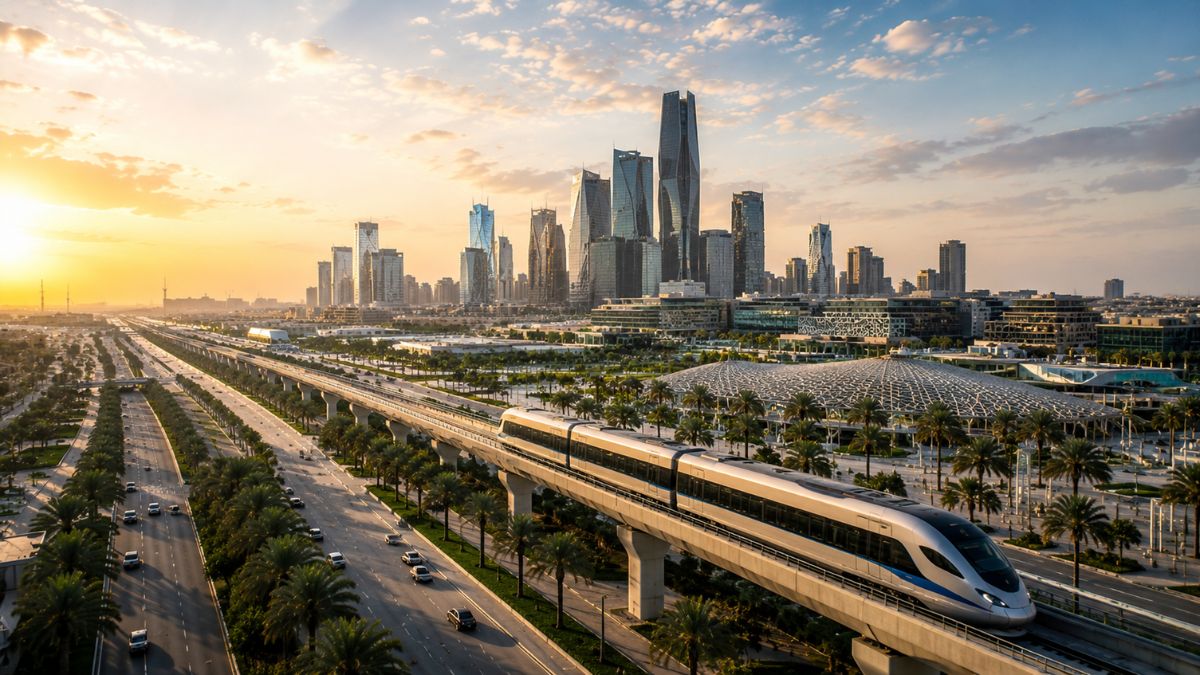
Saudi Arabia is undergoing one of the most ambitious national transformations of the 21st century. Vision 2030 in Saudi Arabia is not simply a reform package or an economic adjustment plan; it is a sweeping redesign of how the Kingdom generates wealth, builds cities, deploys technology, and positions itself on the global stage. From Saudi megaprojects rising out of the desert to bold tech initiatives in Saudi Arabia targeting artificial intelligence, renewable energy, and fintech, the country is actively rewriting its economic DNA.
For decades, oil shaped the Saudi economy. Today, diversification is the driving force. Investors, policymakers, and entrepreneurs worldwide are closely watching Saudi Vision 2030 projects as they redefine what a resource-based economy can become in the digital age. The scale is staggering. The ambition is clear. And the implications stretch far beyond the Gulf region.
More Read

What Is Vision 2030, Saudi Arabia?
Vision 2030 Saudi Arabia is the Kingdom’s comprehensive development blueprint launched in 2016 to reduce its reliance on oil, diversify its economy, and modernise society. But calling it a “plan” barely scratches the surface. It is more accurate to describe it as a national re-engineering effort, one that touches governance, infrastructure, education, tourism, defence, entertainment, and technology all at once.
Why was it launched? The answer is straightforward: oil revenues, while powerful, are volatile. Global energy transitions, price swings, and geopolitical shifts exposed the structural risks of overdependence on hydrocarbons. Saudi Arabia’s Vision 2030 goals aim to future-proof the nation before external forces dictate change. Instead of reacting to global transformation, the Kingdom chose to lead its own.
At its core, the Saudi development plan 2030 rests on three pillars:
- A Vibrant Society – enhancing quality of life, culture, entertainment, and social infrastructure.
- A Thriving Economy – building new industries, supporting private sector growth, and increasing non-oil GDP.
- An Ambitious Nation – improving governance efficiency, transparency, and public sector performance.
The Saudi reform program includes more than 80 initiatives and dozens of Vision Realisation Programs targeting housing, industry, financial services, tourism, and digital government. Implementation is largely driven by the Public Investment Fund (PIF), now one of the world’s most active sovereign wealth funds.
The timeline stretches to 2030, but many projects extend beyond it. This isn’t a short-term stimulus strategy. It’s a generational shift. And, as with any transformation of this scale, it blends economic pragmatism with geopolitical positioning.
Why Economic Diversification Is Critical for Saudi Arabia
Economic diversification in Saudi Arabia is not a luxury; it’s a necessity. For decades, oil accounted for the majority of export revenue and a significant portion of GDP. While that model generated immense wealth, it also created structural concentration risk. When oil prices rise, the economy thrives. When they fall, fiscal pressure follows. That cycle limits long-term planning.
The Saudi economic transformation aims to change this equation entirely. The goal is simple but bold: grow non-oil sectors to the point where they become the primary engines of national prosperity. That means expanding tourism, manufacturing, logistics, technology, entertainment, renewable energy, mining, and financial services.
Private sector growth plays a central role. Historically, the state dominated major industries. Vision 2030 shifts that balance by empowering entrepreneurs, attracting foreign investors, and creating regulatory environments designed for business expansion. Small and medium enterprises (SMEs) are being positioned as job creators, not just supplementary players.
Foreign direct investment is another critical pillar. To become Saudi Arabia’s new economic hub, the Kingdom must integrate deeply with global supply chains and innovation networks. Regulatory reforms, special economic zones, and investment incentives are all part of this effort.
Ultimately, the future of the Saudi economy depends on resilience. A diversified economy can absorb shocks, adapt to global change, and compete internationally. And in a world moving toward digitalisation and decarbonization, resilience is everything.
Saudi Megaprojects Powering Vision 2030
Saudi megaprojects are perhaps the most visible symbols of Vision 2030 in Saudi Arabia. These giga-scale developments are not incremental upgrades; they are entirely new ecosystems designed from the ground up. Airports, ports, smart cities, entertainment hubs, tourism islands, and industrial zones are being developed simultaneously.
Why such a scale? Because incremental change would not deliver transformational results. The biggest Saudi megaprojects are meant to accelerate diversification by attracting global capital, talent, and innovation in concentrated zones. They function as catalysts, jumpstarting new industries and reshaping the country’s international brand.
The Public Investment Fund sits at the centre of this strategy. With hundreds of billions in assets under management, PIF finances and co-invests in these giga projects while also expanding its international portfolio. This dual approach of domestic transformation and global investment strengthens both capital inflows and strategic partnerships.
Saudi giga projects also serve another purpose: signalling. When the Kingdom announces developments worth hundreds of billions of dollars, it sends a message to markets that Vision 2030 progress is backed by serious financial commitment.
From NEOM’s futuristic blueprint to cultural regeneration in Diriyah, these projects are not isolated real estate plays. They are interconnected nodes in a broader economic redesign. Infrastructure is being built not just for today’s population, but for industries that barely exist yet.
And that’s where the transformation becomes truly interesting.
NEOM – The Futuristic Smart City
If Vision 2030, Saudi Arabia, had a physical symbol, it would be NEOM. Announced in 2017, the NEOM project in Saudi Arabia is not just another urban expansion; it is a $500+ billion experiment in building the future from scratch. Imagine designing a city today with no legacy infrastructure, no outdated grids, and no car-dominated streets. What would it look like? That question is exactly what NEOM is trying to answer.
At the heart of NEOM is The Line NEOM, a 170-kilometre linear city designed with zero cars, zero streets, and zero carbon emissions. Instead of spreading outward, The Line rises vertically, concentrating residential, commercial, and leisure spaces within walking distance of one another. The concept flips traditional urban planning on its head. Why spend hours commuting when AI-powered mobility systems can move you across the city in minutes?
Then there’s Oxagon NEOM, envisioned as the world’s largest floating industrial complex. Oxagon integrates advanced manufacturing, port logistics, robotics, and clean energy into a next-generation supply chain hub. Its aim? Position Saudi Arabia as a global centre for advanced industry and maritime trade.
NEOM also includes Trojena, a mountain tourism destination designed to host winter sports, yes, winter sports in Saudi Arabia. The symbolism is powerful: the Kingdom is not just adapting to change; it is redefining its geographic narrative.
Smart cities in Saudi Arabia are no longer theoretical. NEOM integrates artificial intelligence, renewable energy grids, autonomous transportation, and real-time data analytics into its design. Every layer from utilities to security is digitally connected.
For investors and tech professionals, NEOM represents something rare: a clean slate economy. It is a laboratory for the tech future of Saudi Arabia, where innovation isn’t retrofitted—it’s embedded from day one.
The Red Sea Project – Sustainable Tourism Hub
While NEOM captures headlines for its futuristic ambition, the Red Sea Project in Saudi Arabia focuses on a different dimension of transformation: sustainable luxury tourism. For decades, Saudi Arabia was largely absent from the global tourism map. Vision 2030 changes that dramatically.
The Red Sea Project spans an archipelago of more than 90 untouched islands along the Kingdom’s western coastline. The strategy is not mass tourism. Instead, it centres on high-end, environmentally conscious development. Think eco-resorts powered by renewable energy, coral reef preservation programs, and strict visitor caps to protect biodiversity.
Luxury tourism in Saudi Arabia is being carefully curated to attract affluent travellers seeking exclusivity and sustainability. Resorts are being designed with a minimal environmental footprint. Marine ecosystems are monitored using AI-driven conservation tools. Even construction methods prioritise reducing environmental impact.
Why focus on tourism? Because it’s a labour-intensive, high-multiplier industry. It creates jobs in hospitality, transport, retail, and cultural services sectors. It also boosts non-oil GDP while enhancing the country’s global brand.
Under the sustainability Vision 2030, the Red Sea development aims to become carbon-neutral. Solar farms power operations, and waste management systems are engineered for circular efficiency. This isn’t just about building hotels; it’s about proving that green energy in Saudi Arabia can power entire industries.
Tourism under Vision 2030 is not an afterthought. It’s a cornerstone of Saudi Arabia’s economic diversification. And the Red Sea Project shows how growth and sustainability can align if designed intentionally.
Qiddiya – Entertainment & Sports City
In a country with a young, rapidly growing population, entertainment matters. That’s where the Qiddiya project enters the picture. Located near Riyadh, Qiddiya is envisioned as the Kingdom’s entertainment, sports, and culture capital.
Sports investment in Saudi Arabia has already drawn global attention from Formula 1 to international football partnerships. Qiddiya takes this ambition further by building stadiums, motorsport tracks, water parks, theme parks, and esports arenas in one integrated destination.
Entertainment projects in Saudi Arabia once relied heavily on outbound spending, with citizens travelling abroad for leisure experiences. Vision 2030 flips that dynamic by retaining domestic spending and attracting regional visitors.
But Qiddiya isn’t just about amusement parks. It represents a broader youth-focused economic strategy. Over 60% of Saudis are under 35. Creating industries that align with their interest, such as gaming, sports, and live events, supports job creation while reshaping cultural norms.
From a business perspective, entertainment and sports are high-growth sectors globally. Media rights, sponsorship deals, hospitality, and merchandising generate diversified revenue streams. By investing early and at scale, Saudi Arabia aims to secure a regional leadership position.
In the context of Saudi megaprojects, Qiddiya is the social engine. It fuels improvements in the quality of life while building new economic verticals that contribute to the future of the Saudi economy.
Diriyah Gate – Cultural Transformation
Not all Saudi Vision 2030 projects look futuristic. Some look backwards intentionally. Diriyah Gate development focuses on restoring and expanding the historic birthplace of the Saudi state. Located near Riyadh, Diriyah is being transformed into a world-class cultural and heritage destination.
Why invest billions in heritage? Because culture is capital. Tourism Vision 2030 recognises that authenticity differentiates destinations. While NEOM showcases the future, Diriyah celebrates the past.
The project includes restored mud-brick architecture, museums, cultural centres, luxury hotels, and pedestrian-friendly districts. The aim is to attract millions of visitors annually while preserving historical integrity.
Cultural transformation also supports identity-building. Economic diversification in Saudi Arabia isn’t just about GDP; it’s about building a confident national narrative that balances modernisation with tradition.
Diriyah Gate integrates hospitality, retail, arts, and education into one ecosystem. Global hotel brands are entering partnerships, and international cultural institutions are collaborating on exhibitions.
In strategic terms, Diriyah strengthens Saudi Tourism Vision 2030 by diversifying visitor experiences, with futuristic cities on one side and heritage landmarks on the other.
Together, these Saudi giga projects form a diversified portfolio of growth engines: technology, tourism, culture, entertainment, and advanced industry. They aren’t isolated investments. They’re interconnected pillars supporting the broader economic transformation.
Major Tech Initiatives in Saudi Arabia
Infrastructure alone does not create an innovation hub. Digital capability does. That’s why tech initiatives in Saudi Arabia sit at the core of Vision 2030.
The Kingdom’s digital transformation strategy in Saudi Arabia aims to build a fully integrated digital economy. This includes expanding cloud infrastructure, nationwide 5G deployment, smart government platforms, and supporting startups in artificial intelligence, fintech, cybersecurity, and biotech.
Regulatory reforms back Saudi Arabia’s innovation hub. Licensing processes have been streamlined. Foreign companies can establish regional headquarters with incentives in place. Venture capital ecosystems are expanding, supported by both government-backed funds and private investors.
The digital economy in Saudi Arabia is growing rapidly, with e-commerce, digital payments, and online services accelerating. Public services from healthcare appointments to business registrations are increasingly digitised.
But beyond infrastructure, there’s a mindset shift. Universities are expanding STEM programs. Coding bootcamps are training youth. Women’s participation in tech sectors is rising significantly.
Technology under Vision 2030 isn’t a supporting actor; it’s the main engine. AI, robotics, fintech, and smart infrastructure are not future ambitions; they are active investment categories.
The message is clear: if the future of the Saudi economy is diversified, it must also be digital.
Artificial Intelligence & Robotics
Artificial intelligence is not a side project within Vision 2030 in Saudi Arabia; it is a strategic priority. The Kingdom understands that AI will shape productivity, security, healthcare, logistics, finance, and urban planning over the next decade. Countries that lead in AI will influence global supply chains and digital standards. Saudi Arabia intends to be one of them.
The launch of the Saudi Data & AI Authority (SDAIA) signalled a serious institutional commitment. The national AI strategy aims to position the Kingdom among the top AI-driven economies globally by 2030. That means building local talent, attracting global researchers, and embedding AI into both public and private sectors.
AI in Saudi Arabia is already visible in:
- Smart traffic management systems in major cities
- Predictive healthcare diagnostics
- Automated government services
- Energy optimisation across oil and renewable sectors
Robotics in Saudi Arabia is also accelerating, particularly in manufacturing and logistics. In Oxagon NEOM, automation and robotics are expected to drive advanced industrial productivity. Warehouses increasingly use autonomous systems. Ports integrate AI-based logistics software. Even security and surveillance technologies are evolving rapidly.
Why the urgency? Because automation directly boosts economic efficiency. It reduces operational costs, improves accuracy, and strengthens global competitiveness. In a diversified economy, productivity matters more than raw resource extraction.
The tech future of Saudi Arabia depends heavily on data. Building a data-driven ecosystem enables smarter policy decisions, better urban planning, and stronger private-sector innovation. But it also requires cybersecurity infrastructure, regulatory clarity, and public trust.
AI under Vision 2030 is not theoretical. It’s integrated into smart cities in Saudi Arabia, digital government systems, and private enterprise platforms. The Kingdom isn’t waiting to import technology; it’s investing to shape it.
Fintech & Blockchain Development
Financial technology has emerged as one of the fastest-growing tech initiatives in Saudi Arabia. As part of the broader digital economy strategy in Saudi Arabia, fintech innovation is transforming how businesses operate and how citizens manage money.
The Saudi Central Bank has introduced regulatory sandboxes that allow fintech startups to test products under controlled supervision. Open banking frameworks are being implemented to enable secure data sharing between financial institutions and third-party providers. This accelerates innovation while maintaining financial stability.
Fintech in Saudi Arabia spans:
- Digital payments and mobile wallets
- SME lending platforms
- Insurtech solutions
- Cross-border remittance systems
Blockchain in Saudi Arabia is also gaining traction. Government entities have explored blockchain-based verification systems for contracts and documentation. Financial institutions are piloting distributed ledger technologies to enhance transaction transparency and efficiency.
Cybersecurity in Saudi Arabia is a parallel priority. As digital adoption rises, protecting financial systems becomes critical. National cybersecurity strategies focus on safeguarding infrastructure, building domestic expertise, and partnering with global technology firms.
Why does fintech matter so much for Vision 2030? Because capital flow efficiency drives economic growth. Small businesses gain easier access to credit. Consumers benefit from seamless transactions. Foreign investors gain confidence in transparent financial systems.
Saudi Arabia aims to become a regional fintech hub, competing with established centres in the UAE and beyond. By aligning regulatory reforms with technological infrastructure, the Kingdom is building a financial ecosystem that supports entrepreneurship and foreign investment in Saudi Arabia.
In many ways, fintech is the connective tissue of the Saudi economic transformation. It fuels startups, supports megaprojects, and modernises traditional banking all at once.
Digital Government & Smart Infrastructure
A modern economy requires modern governance. That’s why digital transformation in Saudi Arabia extends deeply into public administration. The goal is clear: make government services faster, more transparent, and fully accessible online.
Today, citizens can register businesses, renew licenses, access healthcare services, and pay utilities through integrated digital platforms. This reduces bureaucracy and increases efficiency. For entrepreneurs and investors, time saved equals money saved.
Smart cities in Saudi Arabia go beyond NEOM. Riyadh, Jeddah, and other urban centres are integrating IoT sensors, data-driven traffic systems, and AI-powered urban management tools. Smart infrastructure enables:
- Energy-efficient grids
- Real-time public transportation tracking
- Water management optimization
- Environmental monitoring
The digital economy in Saudi Arabia is growing as connectivity expands. Nationwide 5G networks support industrial automation, remote healthcare, and cloud-based enterprise solutions. Data centres are expanding capacity to support domestic and international businesses.
Digital government also enhances transparency. E-procurement platforms reduce corruption risks. Performance dashboards track public sector KPIs. Data analytics improve policy outcomes.
From a strategic perspective, digital infrastructure is foundational to becoming a Saudi Arabia innovation hub. Without high-speed connectivity, secure data systems, and responsive governance, innovation ecosystems struggle to scale.
Under Vision 2030, digitalisation is not optional; it is systemic. Every ministry, municipality, and agency is expected to align with modernisation goals. The result is a governance model increasingly aligned with global best practices.
Renewable Energy and Sustainability Projects
The renewable energy projects launched by Saudi Arabia are among the most critical components of Vision 2030. For decades, the Kingdom was synonymous with oil. Today, it is investing aggressively in green energy initiatives in Saudi Arabia, positioning it as a leader in the clean energy transition.
Solar energy projects in Saudi Arabia are expanding rapidly. With abundant sunlight, the Kingdom holds a natural competitive advantage. Large-scale solar farms are already contributing to the national grid, reducing domestic oil consumption and freeing more crude for export.
Wind projects complement solar expansion, particularly in coastal and northern regions. But perhaps the most globally significant initiative is the hydrogen project Saudi Arabia is developing, especially green hydrogen facilities linked to NEOM.
Green hydrogen could become a major export commodity in a decarbonising world. If Saudi Arabia can produce it at scale and competitive cost, it may replicate its oil dominance in the clean energy era.
Sustainability Vision 2030 also includes environmental restoration, carbon capture technologies, and circular economy initiatives. The Saudi Green Initiative aims to plant billions of trees and significantly reduce emissions.
Net-zero ambitions reflect a broader strategic shift. The future of the Saudi economy cannot depend solely on fossil fuels in a world increasingly focused on climate responsibility.
Investment scale in renewable energy runs into tens of billions of dollars. Partnerships with international energy companies strengthen technical capabilities and accelerate deployment.
In essence, renewable energy under Vision 2030 is both defensive and offensive: defensive in reducing climate risk exposure, offensive in capturing new global market opportunities.
How Vision 2030 Is Creating New Industries
Economic diversification in Saudi Arabia is not abstract; it is visible in the emergence of entirely new sectors. Vision 2030 is actively cultivating future industries in Saudi Arabia that barely existed a decade ago.
Startups are gaining momentum. Venture capital funding is increasing, supported by government-backed funds and private investors. Incubators and accelerators are nurturing innovation across fintech, biotech, AI, and logistics.
Manufacturing localisation is another strategic push. Instead of importing finished goods, Saudi Arabia aims to produce more domestically, from defence equipment to consumer electronics. This strengthens supply chain resilience and creates skilled jobs.
Tourism and entertainment, powered by Saudi megaprojects like Qiddiya and the Red Sea Project, are generating new employment categories from hospitality management to event production.
Gaming and esports are particularly promising. With a young population and high digital engagement, Saudi Arabia is investing in gaming studios, esports tournaments, and content development. This positions the Kingdom within a fast-growing global industry.
Future jobs in Saudi Arabia increasingly emphasise technology, creativity, and advanced skills. Education reforms align university programs with labour market demands.
Becoming a Saudi Arabia innovation hub requires more than capital; it requires ecosystem building. Vision 2030 aims to integrate infrastructure, regulation, funding, and talent development into a coherent system.
New industries don’t emerge overnight. But under Vision 2030, they are emerging deliberately.
Impact on Foreign Investment and Global Partnerships
Foreign investment in Saudi Arabia is central to Vision 2030. Domestic capital alone cannot sustain transformation at this scale. International partnerships bring expertise, technology transfer, and credibility.
Regulatory reforms have made it easier for global corporations to establish regional headquarters in Riyadh. Investment opportunities in Saudi Arabia now span renewable energy, technology, tourism, infrastructure, healthcare, and advanced manufacturing.
The Public Investment Fund acts as both a domestic investor and a global dealmaker. PIF-backed investments extend into global technology firms, sports franchises, and infrastructure assets. This builds reciprocal relationships that encourage foreign companies to invest within the Kingdom.
Saudi GDP growth forecast increasingly factors in non-oil sector expansion. As diversification progresses, investor confidence strengthens.
Strategic alliances with global tech firms support AI development, cloud computing expansion, and cybersecurity infrastructure. Energy partnerships accelerate the deployment of hydrogen and renewable energy.
For multinational corporations, the Kingdom represents both a market and a gateway. With its geographic position linking Asia, Europe, and Africa, Saudi Arabia’s ambitions to become a new economic hub carry logistical advantages.
Vision 2030 has shifted global perception. Saudi Arabia is no longer viewed solely as an oil exporter. It is increasingly seen as a capital-rich transformation economy actively shaping the Middle East technology transformation.
Challenges Facing Vision 2030
Ambition at this scale inevitably faces challenges. Vision 2030 progress update reports show measurable achievements, but the execution complexity remains significant.
Funding requirements for Saudi megaprojects are enormous. Sustaining investment during periods of global economic volatility requires careful fiscal management.
Global economic risks, including shifts in interest rates, geopolitical tensions, and supply chain disruptions, can affect capital flows and construction timelines.
Execution complexity is another factor. Coordinating dozens of giga-projects, regulatory reforms, and sectoral transformations simultaneously demands high administrative efficiency.
Critics sometimes ask: Is Vision 2030 successful? The answer depends on metrics. Non-oil GDP growth has improved. Tourism numbers have surged. Women’s workforce participation has risen significantly. Yet long-term sustainability will depend on continued momentum.
The impact of Vision 2030 on the economy is already visible, but full diversification takes time. Structural transformation cannot be measured only in quarterly statistics.
Balanced analysis requires acknowledging both progress and pressure points. Large-scale transformation is rarely linear. But strategic commitment remains strong.
The Future of the Saudi Economy Beyond 2030
What happens after 2030? The future of the Saudi economy is likely to extend far beyond the original timeline.
Over the next 5-10 year outlook, non-oil sectors could dominate GDP growth. Renewable energy exports, particularly hydrogen, may become major revenue streams. Technology-driven industries could anchor regional innovation networks.
Saudi Arabia’s ambitions to become a new economic hub position it as a bridge between East and West. Logistics corridors, digital infrastructure, and financial services could redefine trade patterns in the Middle East.
Middle East technology transformation may increasingly revolve around Saudi-led initiatives in AI, green energy, and advanced manufacturing.
Long-term transformation depends on sustained policy continuity, global integration, and talent development. But the trajectory is clear: Vision 2030, Saudi Arabia is not just about catching up, it is about leapfrogging into a diversified, digital-first economy.
Conclusion
Vision 2030 in Saudi Arabia represents one of the most ambitious national transformation agendas in modern history. Through Saudi megaprojects, aggressive tech initiatives in Saudi Arabia, renewable energy investments, and economic diversification strategies, the Kingdom is reshaping the future of the Saudi economy. Challenges remain, but the structural shift toward a diversified, innovation-driven model is unmistakable. For investors, policymakers, and entrepreneurs, the message is clear: Saudi Arabia is not just adapting to the future; it is building it.